Designing for Intent, Not Impulse
The store is always open. E-commerce has removed nearly every barrier between wanting something and buying it, and impulse purchasing has followed. This case study documents a mixed-methods study investigating the emotional and design-driven forces behind online impulse buying, and evaluates Window Shopping Mode, a prototype feature designed for Amazon that gives shoppers a more intentional, low-pressure way to browse without losing the joy of discovery.
My Role:
Lead UX Researcher
Scope:
Mixed-Methods Research · Generative Interviewing · Quantitative Polling · RITE Usability Testing · Affinity Mapping
Team:
2 Researchers · 2 Designers
Timeline:
2 Months
Project Type:
Graduate Research Course
Background
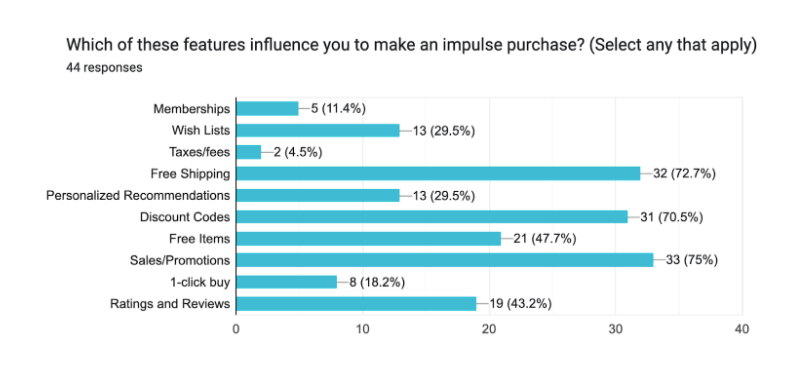
Our team set out to understand what drives impulse purchasing behavior in e-commerce and whether design could offer a more intentional alternative. To do so, we administered a poll to 47 respondents and conducted contextual interviews with 5 online shoppers.
“I'll go onto the website and put [my items] in my cart, and I'll see that it hasn't hit that amount you need to get the discount. So I keep browsing around a little more and add something else to my cart. That's usually the impulse.
-Participant E
Sample Responses from Poll
These findings led us to design Window Shopping Mode. We then evaluated the prototype through a series of moderated usability sessions to understand how well it resonated with real users.
Window Shopping Mode
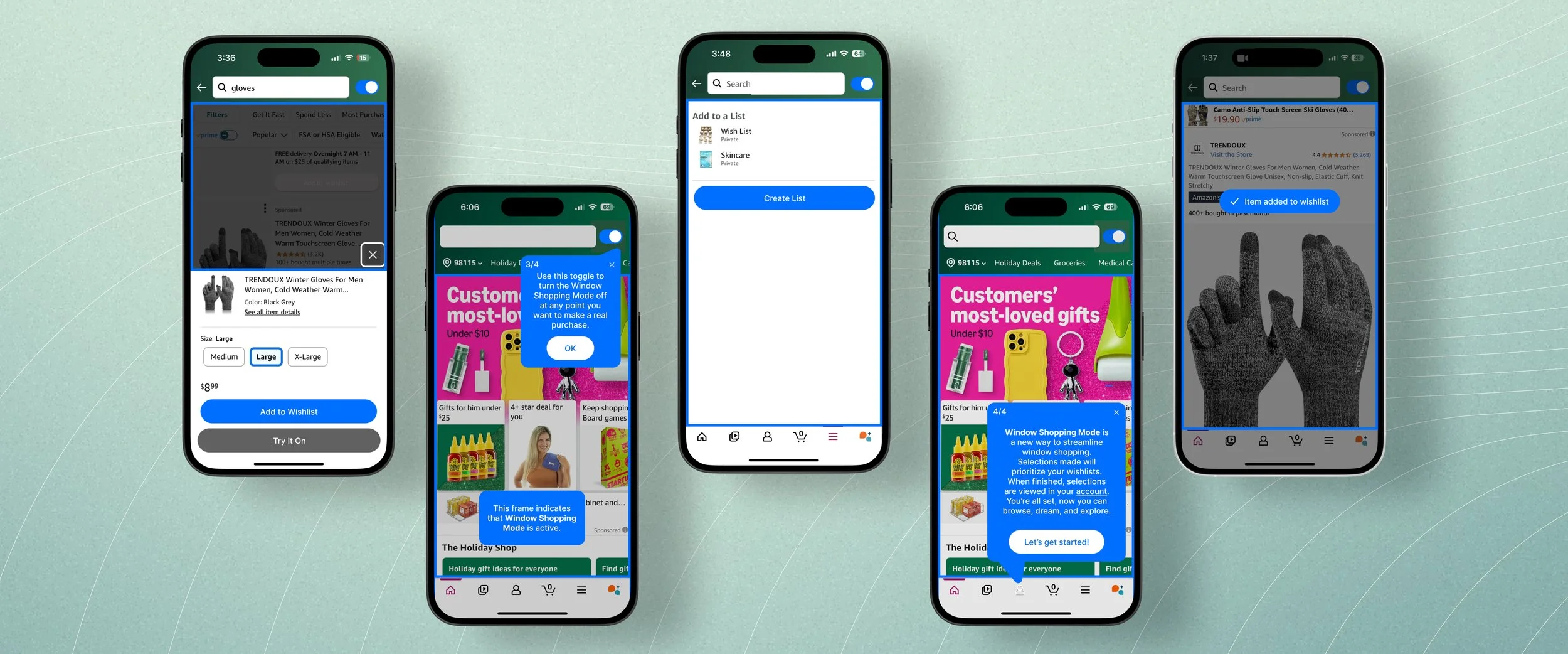
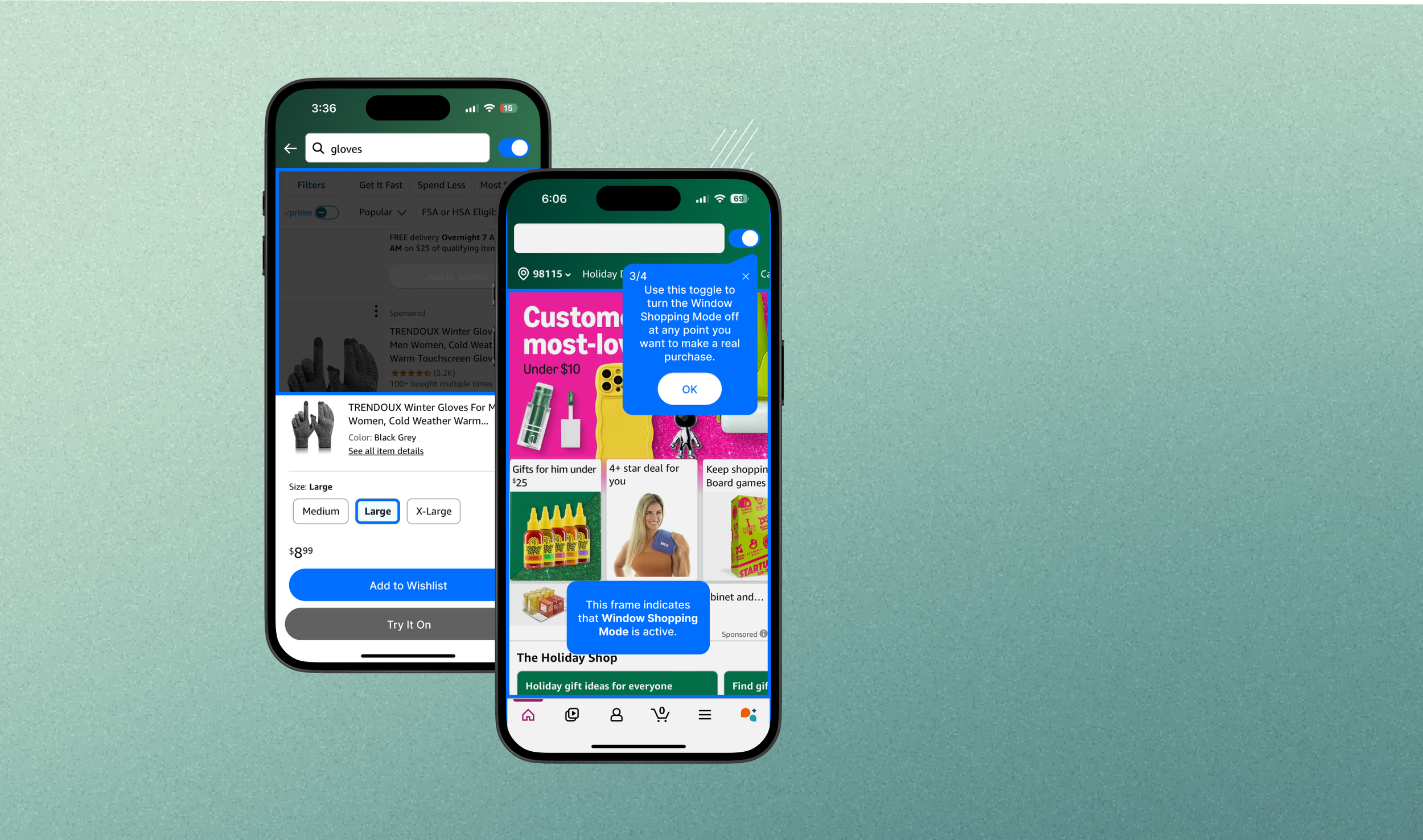
A feature concept for Amazon that deprioritizes cart additions in favor of wishlist-based browsing, giving users space to shop with more intention.
Goals and Objectives
Understand the emotional drivers and behavioral patterns behind online impulse purchasing.
1
Identify which platform design features most influence unplanned buying decisions.
2
Evaluate the usability and effectiveness of a "Window Shopping Mode" prototype designed to encourage intentional browsing.
3
Format & Methods
Phase 1 - Generative Research
I administered a poll to 47 respondents to establish broad patterns, then conducted 30-minute contextual interviews with 5 participants to probe the emotional triggers behind impulse shopping behavior.
Phase 2 - Evaluative Research (RITE Method)
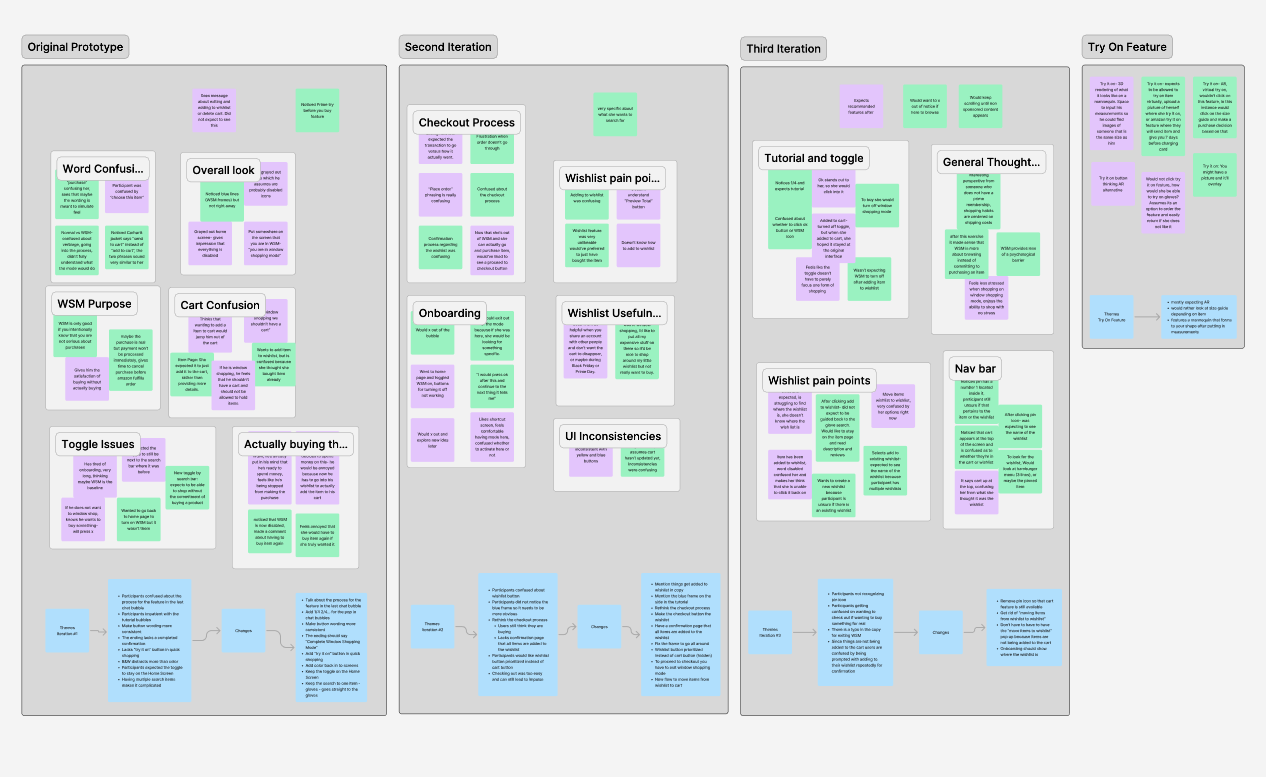
I moderated usability sessions using a hybrid of the RITE method and cognitive walkthrough to iterate on the Window Shopping Mode prototype between sessions while tracking how participants' mental models interacted with an unfamiliar feature on a very familiar platform.
Sample & Screener Criteria
6 participants were recruited for 30-minute RITE sessions:
Self-identified online window shoppers (daily to 2–4 times per month)
Active Amazon shoppers
Primary mobile shoppers
Key Insights
RITE Session Analysis
Insight 1: Impulse Shopping is a Persistent Habit. But Intent Can Be Designed For.
Wishlists emerged as an unexpectedly powerful tool during testing. Participants described them as a way to create natural distance between browsing and buying, finding that a browsing-first mode let them engage with the platform without feeling pressured to commit.
Impulse shopping isn't going away, but designing for intent rather than conversion can meaningfully shift the experience.
“It made sense that Window Shopping Mode is more about browsing instead of committing to purchasing an item. I think it would be helpful in cases where someone is not trying to buy anything.”
-Participant EE
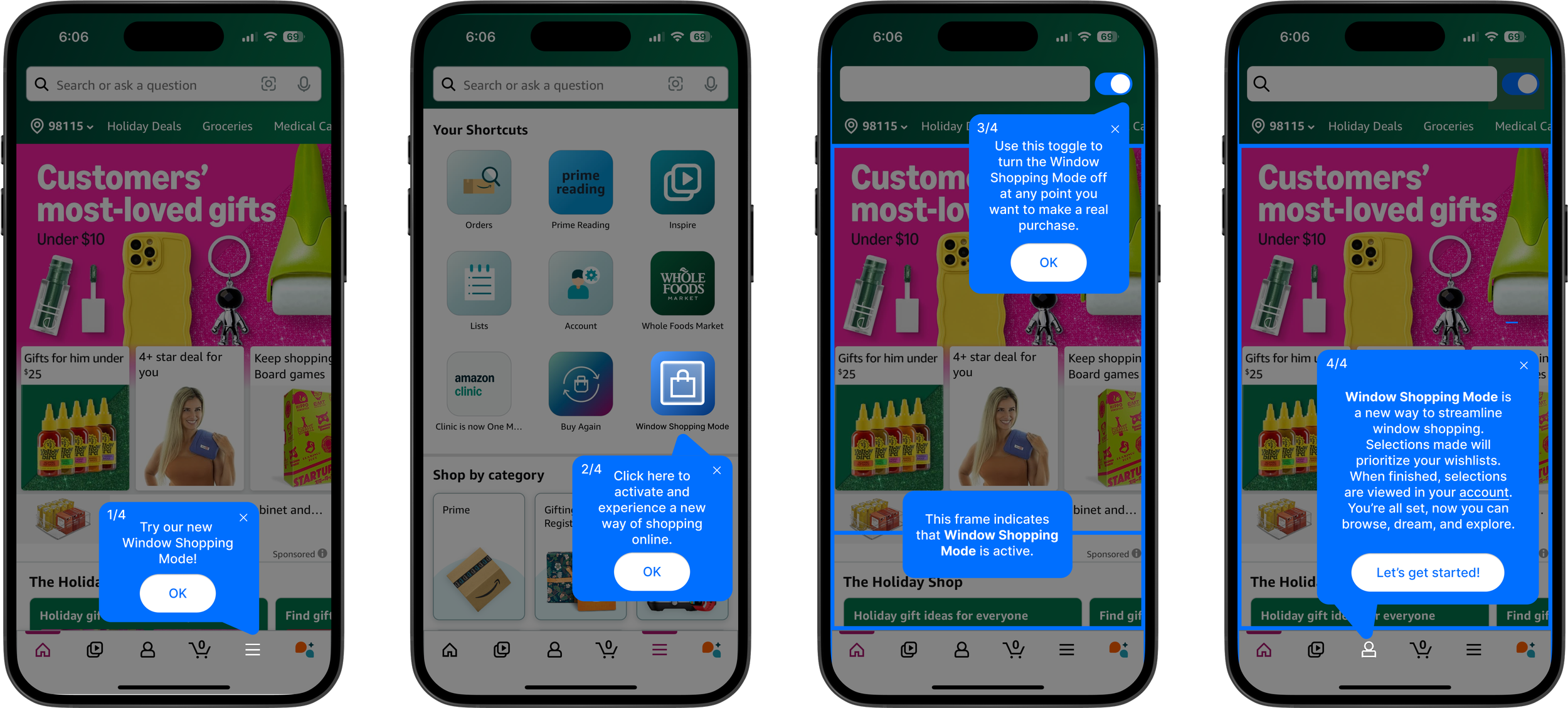
Window Shopping Mode Onboarding Screens
Insight 2: Inconsistencies From a User's Mental Model Turn the Unexpected Into the Unwanted.
Trust on familiar platforms is built on deeply ingrained expectations.
When Window Shopping Mode introduced unfamiliar interactions, hesitation followed. Most strikingly, several participants still believed they were making real purchases even after being told the checkout was a simulation.
This shows that introducing new features on established platforms requires careful alignment with existing conventions, or risk undermining the trust that brought users there in the first place.
“I’m confused, and would try the whole process again. I’m frustrated that the order did not go through.”
-Participant DD
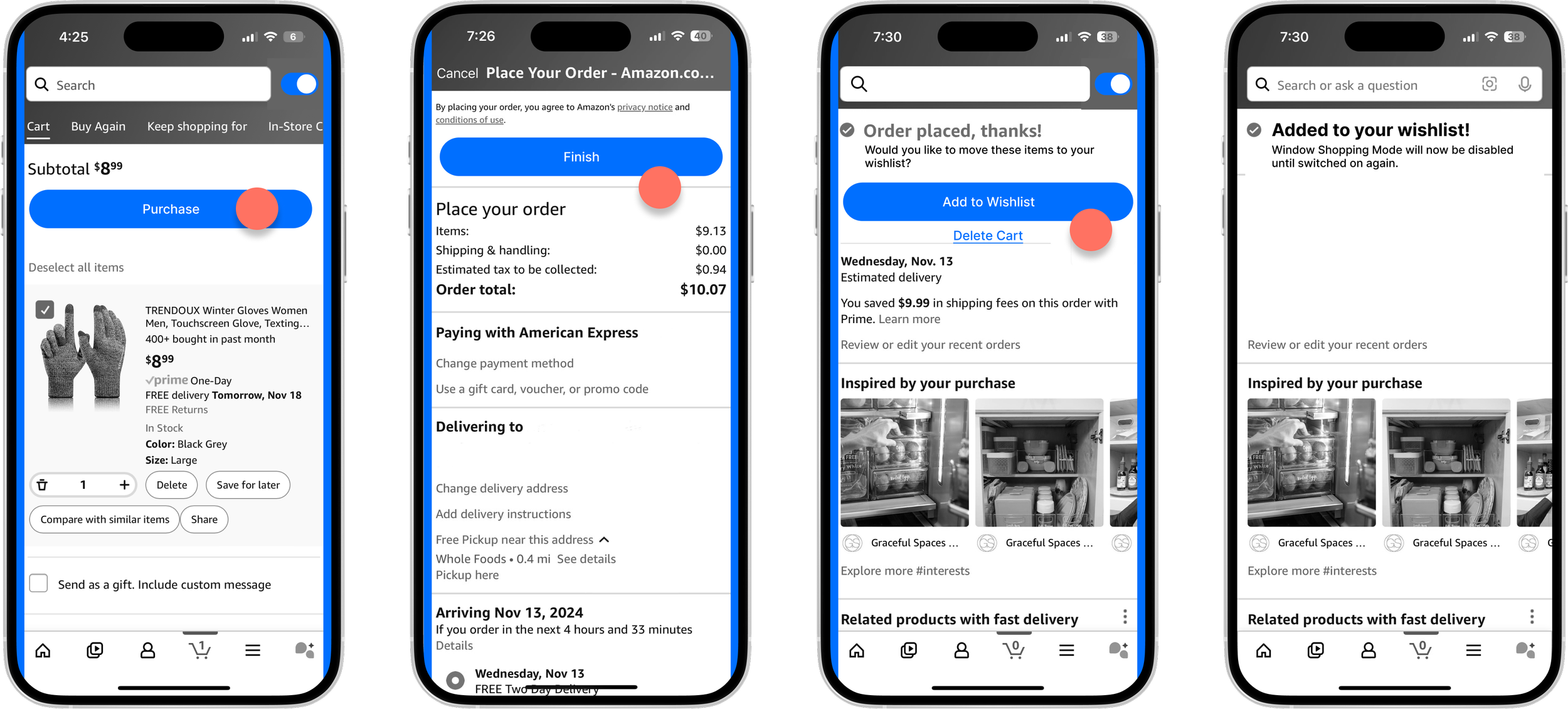
Window Shopping’s Fake “CheckOut” Screen Flow
Insight 3: Decentering Scarcity Gives Users Space to Shop on Their Own Terms.
Scarcity signals hijack decision-making by creating artificial pressure. Without them, participants evaluated products based on personal value rather than external urgency.
This suggests that reorienting the shopping experience around intent rather than conversion doesn't just benefit the shopper, it builds the kind of trust that keeps them coming back.
“I feel less stressed when shopping on Window Shopping Mode, [and] I enjoy the ability to shop with no stress.”
-Participant FF
Impact
📦 Product Impact
Research findings directly shaped the prototype across iterations. After early sessions revealed that users still believed they were making real purchases during a simulated checkout, the team removed the cart interaction entirely and replaced it with a wishlist-centered flow.
🧭 Strategic Impact
The findings reframed the problem from discouraging purchases to designing for intent. By giving users agency and reducing regret-driven returns, Window Shopping Mode positions itself as a long-term brand trust play rather than a short-term conversion tool.
Reflections
💡 On the gap between insight and design
One of the harder lessons from this project was accepting that good research doesn't always translate cleanly into design solutions. The finding that impulse shopping is a persistent habit that users don't actually want to quit pushed us to rethink our assumptions about what the feature was even trying to do.
👥 Recruit More Broadly
All participants fell between ages 20–35 and skewed female. Future studies would prioritize broader demographic recruitment from the outset to strengthen generalizability.
⭐ Ratings & Reviews
Despite being a recurring theme in generative research, ratings and reviews were not addressed in the prototype — a missed opportunity worth exploring in future iterations.